
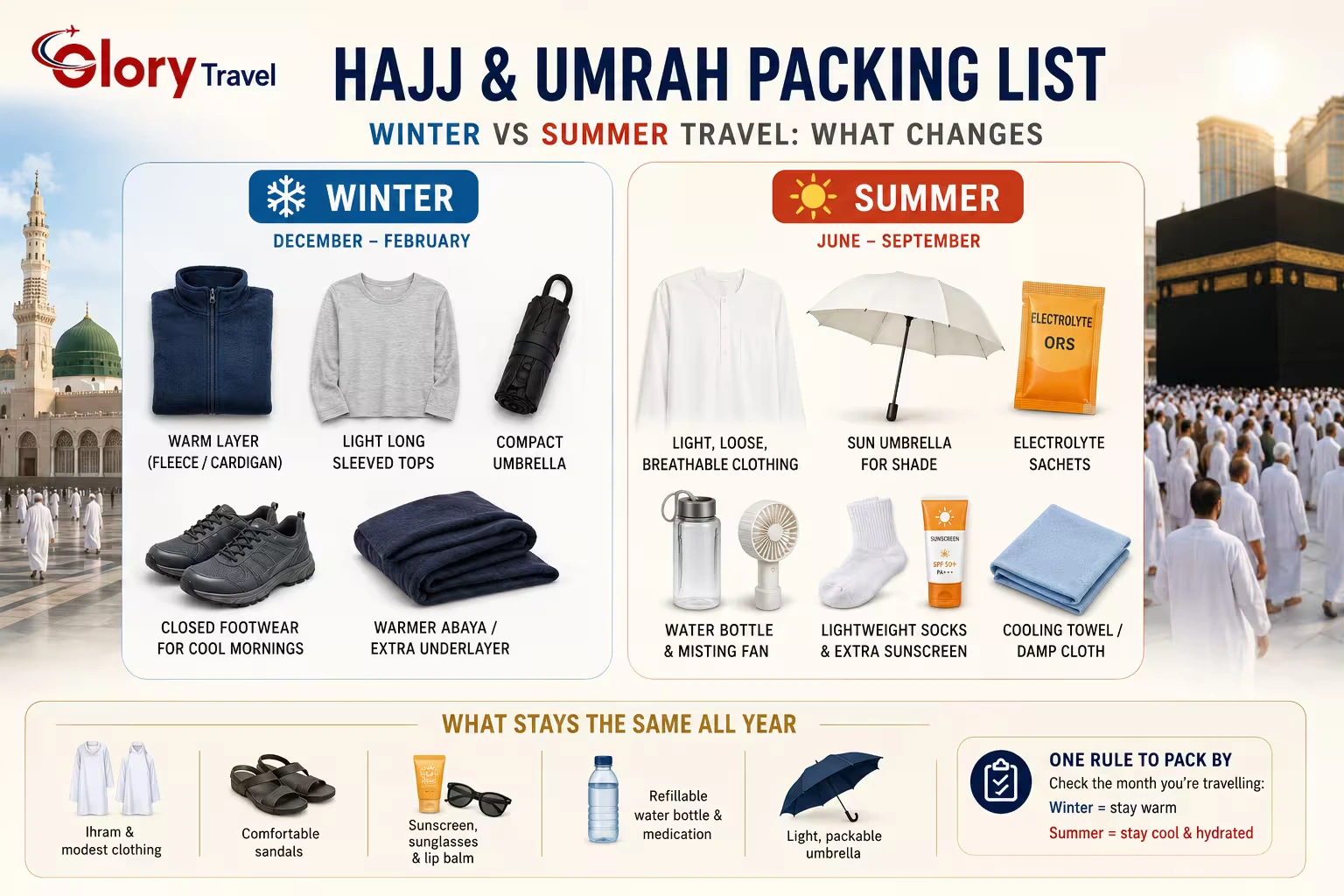
The core of your Umrah packing list stays the same all year, but the season decides what you add, and getting that wrong leaves you cold in a Madinah winter or dangerously hot in a summer tawaf. This guide covers only what changes with the weather. It builds on our general packing list and is driven by the month-by-month temperatures in our weather guide, both linked below.
Start with the master list, then adjust for season This is a seasonal top-up, not a full list. Pack the essentials from our complete Umrah packing list first, then use this guide to adjust for winter or summer. The temperatures behind these choices come from our Makkah and Madinah weather guide.
Winter in the holy cities is mild by day and genuinely cold at night, especially in Madinah, so you pack a warm layer. Summer is severe, with highs of 43 to 44C, so you pack for heat management: shade, cooling and hydration. The ihram garments themselves do not change; everything around them does.
Days are comfortable; early mornings and evenings are cold, particularly in Madinah. Add:
A warm layer you can carry: a fleece, cardigan or thick shawl for Fajr and evening prayers.
Light long-sleeved tops for the daytime, which stays warm in Makkah.
A compact umbrella or light poncho, since the little rain that falls comes in these months.
Comfortable closed footwear for cool mornings, alongside your sandals for the Haram.
For women, a warmer abaya or an extra underlayer for the cold nights.
Heat is the main challenge and a genuine health risk. Add:
The lightest, loosest, light-coloured breathable clothing you own; avoid dark colours and synthetics.
A wide sun umbrella for shade, close to essential on open marble.
Electrolyte or oral rehydration sachets to add to water.
A refillable water bottle and a small handheld or misting fan.
Lightweight socks for the hot marble near the Haram, plus extra sunscreen and lip balm.
A damp cloth or cooling towel for the neck.
March to May warms quickly, and October to November cools gradually. Pack mainly for heat but add one light layer for cooler evenings, especially in Madinah. These shoulder seasons are the most forgiving, but do not underestimate how fast spring turns hot.
The ihram garments and, for women, modest everyday clothing.
Comfortable, well-broken-in sandals.
High-SPF sunscreen, sunglasses and lip balm; the sun is strong even in winter.
A refillable water bottle and personal medication.
A light, packable umbrella (shade in summer, rain cover in winter).
Check the month you are actually travelling, then ask a single question: am I packing to stay warm, or to stay cool? Winter means one good warm layer you can carry; summer means shade, cooling and constant hydration. Everything else on your list stays the same.
What should I pack differently for winter Umrah?
Add a warm layer you can carry (fleece, cardigan or thick shawl) for cold early mornings and evenings, especially in Madinah, plus light long-sleeved daytime tops and a compact umbrella for the occasional rain.
What should I pack for summer Umrah?
Pack for heat: the lightest, loosest, light-coloured breathable clothing, a wide sun umbrella, electrolyte sachets, a refillable water bottle, a misting fan, lightweight socks for hot marble, and extra sunscreen.
Do I need warm clothes for Umrah in winter?
For daytime, no; for early mornings and evenings, yes, especially in Madinah, where nights drop to around 12 to 13C. Pack one warm layer even if the daytime forecast looks mild.
Does the ihram change between summer and winter?
No. The ihram garments stay the same year-round. What changes is everything around them: a warm carry layer in winter, and shade, cooling and hydration gear in summer.
Which season is easiest to pack for?
Spring and autumn are the most forgiving: pack mainly for heat with one light layer for cooler evenings. Winter needs a warm layer; summer needs full heat-management gear.


Glory Travel and Tours offers unforgettable journeys with expertly crafted Hajj, Umrah, and leisure packages. Committed to excellence, we ensure comfort, convenience, and care every step of the way.
Copyright© 2025 GloryTravel. All Rights Reserved.


SHARE THIS BLOG