
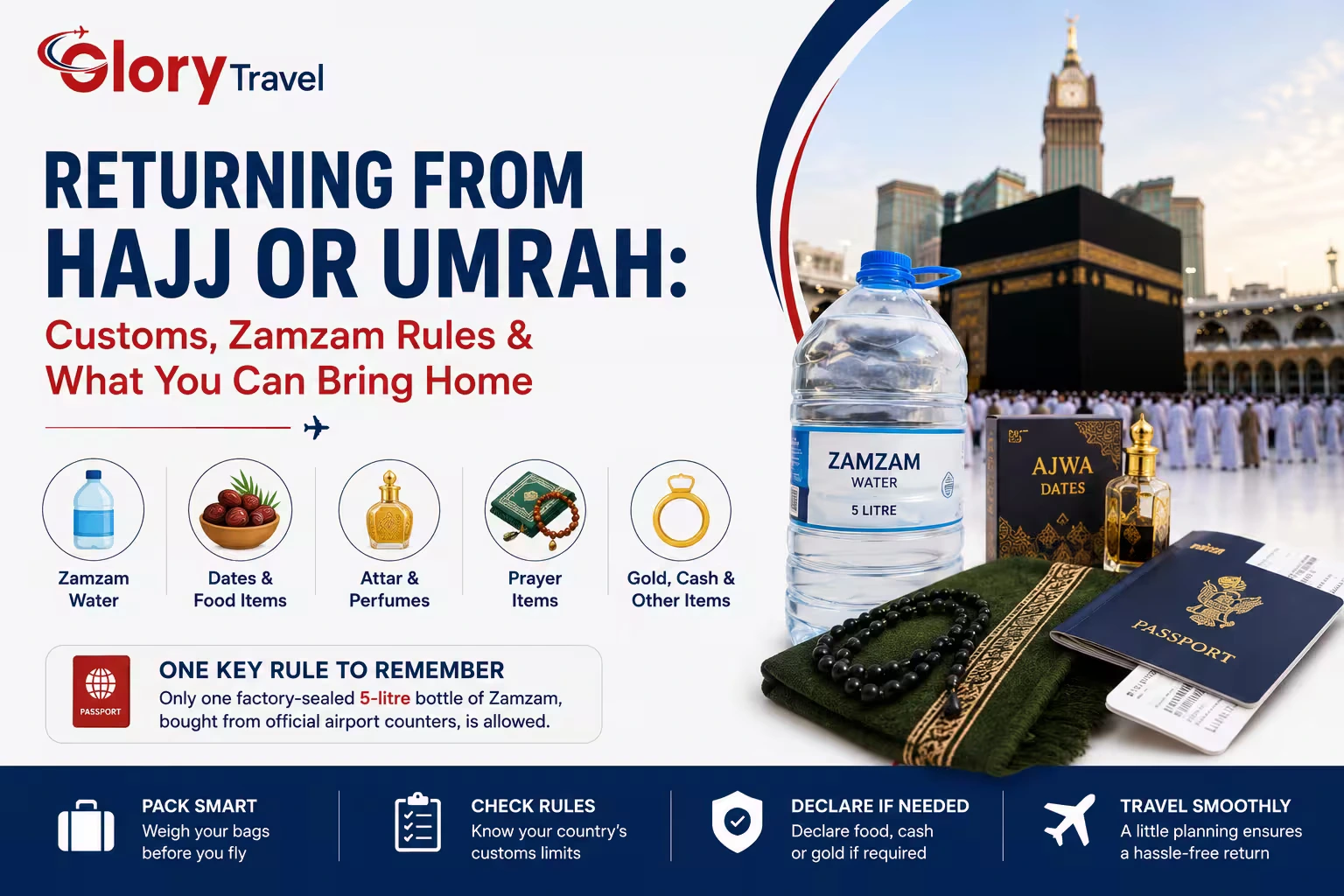
The journey is not quite over when the rituals end; getting home smoothly means knowing the rules on Zamzam, dates and customs. This is a practical, logistics-focused guide to bringing things back, so your return is easy and nothing gets left at the airport. It covers the physical side of coming home; for the spiritual side, see our separate guide on life after Umrah.
Each pilgrim may bring one factory-sealed 5-litre bottle of Zamzam, bought from official sales counters at the airport by showing your passport. Zamzam bought from shops in Makkah or Madinah is not accepted as checked baggage, so wait and buy the sealed airport bottle for your flight home.
On many pilgrim-route carriers, the sealed 5-litre bottle is carried free and outside your normal baggage allowance, but confirm this with your airline.
Do not pack city-bought Zamzam in your checked luggage; it will not be accepted.
Share it in small amounts at home; a little goes a long way.
Dates, especially Ajwa from Madinah, are a favourite gift, but food is where customs rules bite. Your home country may limit or restrict how much fresh food you can bring in.
Keep dates and other food in sealed, original packaging.
Keep quantities sensible; bulk amounts are more likely to be questioned.
Check your own country's customs rules on importing food before you buy a lot.
Declare food if your destination requires it; honesty avoids penalties.
**Attar and non-alcoholic perfume oils. **Popular and generally fine, but check liquid limits for hand luggage.
**Prayer items. **Prayer mats, tasbih, caps and scarves pack easily and pose no issue.
**Gold and jewellery. **Many countries have duty-free limits on the value or weight you can bring in; check yours if you buy gold.
**Cash. **Most countries require you to declare cash above a set threshold on arrival.
Weigh your bags before leaving the hotel; souvenirs add up fast and excess-baggage fees are steep.
Leave room, and ideally a padded spot, for the sealed Zamzam bottle.
Keep documents, medication and anything fragile in your hand luggage.
Pack gifts where they are easy to show if customs asks to inspect them.
Follow the customs channels correctly: use the “nothing to declare” lane only if that is genuinely true. If you are carrying food, gold, or cash above the limit, declare it. A brief declaration is far better than a penalty for an undeclared item, and most pilgrimage souvenirs pass through without issue when packaged and declared properly.
For the airport side of departure, including the Zamzam sales counters, see our Jeddah airport guide for pilgrims.
How much Zamzam water can I bring home?
One factory-sealed 5-litre bottle per pilgrim, bought from official airport sales counters with your passport. Zamzam bought in city shops is not accepted as checked baggage.
Is Zamzam water counted in my baggage allowance?
On many pilgrim-route carriers the sealed 5-litre bottle is carried free and outside your normal allowance, but this varies by airline, so confirm with yours before you travel.
Can I bring dates back from Hajj or Umrah?
Usually, but your home country's customs may limit how much fresh food you can bring. Keep dates in sealed original packaging, keep quantities reasonable, and check your country's import rules before buying in bulk.
Do I need to declare anything when I get home?
Declare food if required, gold or jewellery above your country's duty-free limit, and cash above the declaration threshold. A brief declaration avoids penalties for undeclared items.
Can I pack Zamzam bought in Makkah in my checked luggage?
No. Only the factory-sealed 5-litre bottle bought at official airport counters is accepted. Zamzam bought from city shops will not be accepted as checked baggage.


Glory Travel and Tours offers unforgettable journeys with expertly crafted Hajj, Umrah, and leisure packages. Committed to excellence, we ensure comfort, convenience, and care every step of the way.
Copyright© 2025 GloryTravel. All Rights Reserved.
SHARE THIS BLOG