
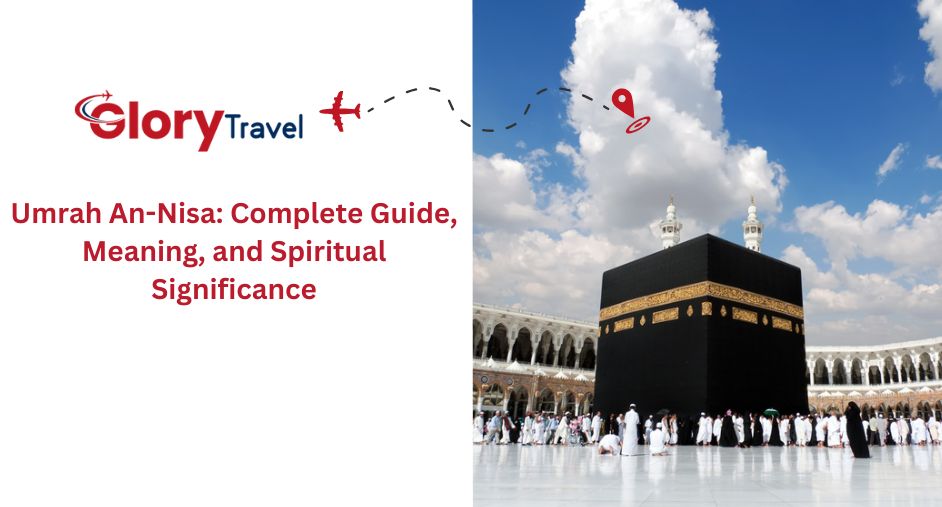
Umrah An-Nisa is one of the most spiritually rewarding acts of worship in Islam. Unlike regular Umrah, this form of pilgrimage holds a unique historical and spiritual background tied to the events after the Treaty of Hudaybiyyah. Understanding Umrah An-Nisa not only deepens your knowledge but also enhances the spiritual essence of your journey to the Holy Kaaba.
The term “Umrah An-Nisa” translates literally to “The Umrah of Women.” However, it does not refer exclusively to women. Historically, this Umrah was performed after the Prophet ﷺ and his companions were denied entry to Makkah during the Treaty of Hudaybiyyah. When they returned the following year, that Umrah became known as Umrah Al-Qadha or Umrah An-Nisa, symbolizing fulfillment of the previous year’s missed Umrah.
While the rituals of both Umrah types are the same, Ihram, Tawaf, Sa’i, and Tahallul, the difference lies in context and intention. Umrah An-Nisa represents completion or compensation for an earlier missed Umrah, making it a form of fulfillment or “Qadha” Umrah.
In the 6th year after Hijrah, Prophet Muhammad ﷺ and his companions set out for Umrah but were prevented by the Quraysh. A peace treaty, known as Hudaybiyyah, was signed, allowing them to return the next year. True to his word, the Prophet ﷺ performed Umrah the following year, marking it as Umrah An-Nisa.
This event holds deep significance, reflecting patience, obedience, and faith in Allah’s divine timing.
Performing Umrah An-Nisa is a profound act of devotion that erases sins and renews one’s faith. The Prophet ﷺ said:
“(The performance of) ‘Umrah is an expiation for the sins committed between it and the previous one.” Sahih Bukhari
The Messenger of Allah ﷺ emphasized the virtue of completing what one vowed or intended for the sake of Allah. Hence, Umrah An-Nisa teaches believers about fulfilling commitments and perseverance.
Umrah An-Nisa is not obligatory unless it replaces a missed Umrah that one had vowed to perform. It is, however, highly recommended for those who wish to complete an unfulfilled intention.
If someone made a vow (nazr) to perform Umrah but could not due to unavoidable circumstances, then performing Umrah An-Nisa becomes wajib upon them later.
Make the intention from your heart to perform Umrah An-Nisa solely for Allah’s sake.
Enter the state of Ihram from the Miqat. Men wear the two white unstitched garments, while women wear modest clothing without face covering.
Perform seven counter-clockwise circuits around the Kaaba, starting from the Black Stone (Hajr al-Aswad).
After Tawaf, perform seven rounds of Sa’i between the hills of Safa and Marwah.
Conclude your Umrah by shaving (for men) or trimming (for women) the hair.
Must be performed with a sincere intention.
Ihram should be worn properly from the Miqat.
Avoid forbidden acts during Ihram like cutting nails or using perfume.
Performing Tawaf incorrectly.
Skipping Sa’i or mixing the number of rounds.
Forgetting to trim hair after completion.
| Aspect | Hajj | Umrah An-Nisa |
|---|---|---|
| Obligation | Once in lifetime (if able) | Sunnah or Wajib (if vowed) |
| Timing | Specific (Dhul Hijjah) | Anytime of the year |
| Duration | Several days | Few hours |
Traveling with a Mahram: Women must travel with a Mahram unless part of a secure, approved group.
Ihram for Women: Simple, modest clothing without gloves or face covering suffices.
Rules During Menstruation: Women can perform all rites except Tawaf until they are purified.
If someone has passed away or is unable to perform Umrah, you may perform Umrah An-Nisa on their behalf with the correct intention. Both the performer and the deceased gain immense spiritual reward.
Today, numerous travel agencies like Glory Travel Tours offer specialized Umrah packages covering flights, accommodation, transport, and guided ziyarah.
Book early for best prices.
Carry Ihram clothing and necessary documents.
Stay hydrated and maintain patience throughout the journey.
Performing Umrah An-Nisa brings forgiveness, tranquility, and closeness to Allah. It is a spiritual cleanse that renews faith and soul, a journey of inner peace and divine connection.
No. Despite the name, it is not gender-specific.
No. Umrah An-Nisa is a separate act of worship and cannot replace the obligation of Hajj.
Q. What is the meaning of Umrah An-Nisa?
It refers to the Umrah performed after being previously denied or delayed, symbolizing fulfillment of one’s vow or missed Umrah.
Q. Is Umrah An-Nisa only for women?
No, it is for both men and women; the name has historical significance, not gender limitation.
Q. Can I perform Umrah An-Nisa on behalf of my deceased parent?
Yes, through Umrah Badal, you can perform it on behalf of someone unable to do so.
Q. When is the best time to perform Umrah An-Nisa?
Anytime of the year, except during Hajj days, is suitable.
Q. Is Umrah An-Nisa compulsory?
It becomes obligatory only if you vowed or missed an earlier Umrah.
Umrah An-Nisa is a beautiful reminder of patience, faith, and fulfillment of intentions. Whether performed for oneself or on behalf of another, it represents a journey of devotion and purification that brings one closer to Allah’s mercy.


Glory Travel and Tours offers unforgettable journeys with expertly crafted Hajj, Umrah, and leisure packages. Committed to excellence, we ensure comfort, convenience, and care every step of the way.
Copyright© 2025 GloryTravel. All Rights Reserved.


SHARE THIS BLOG