
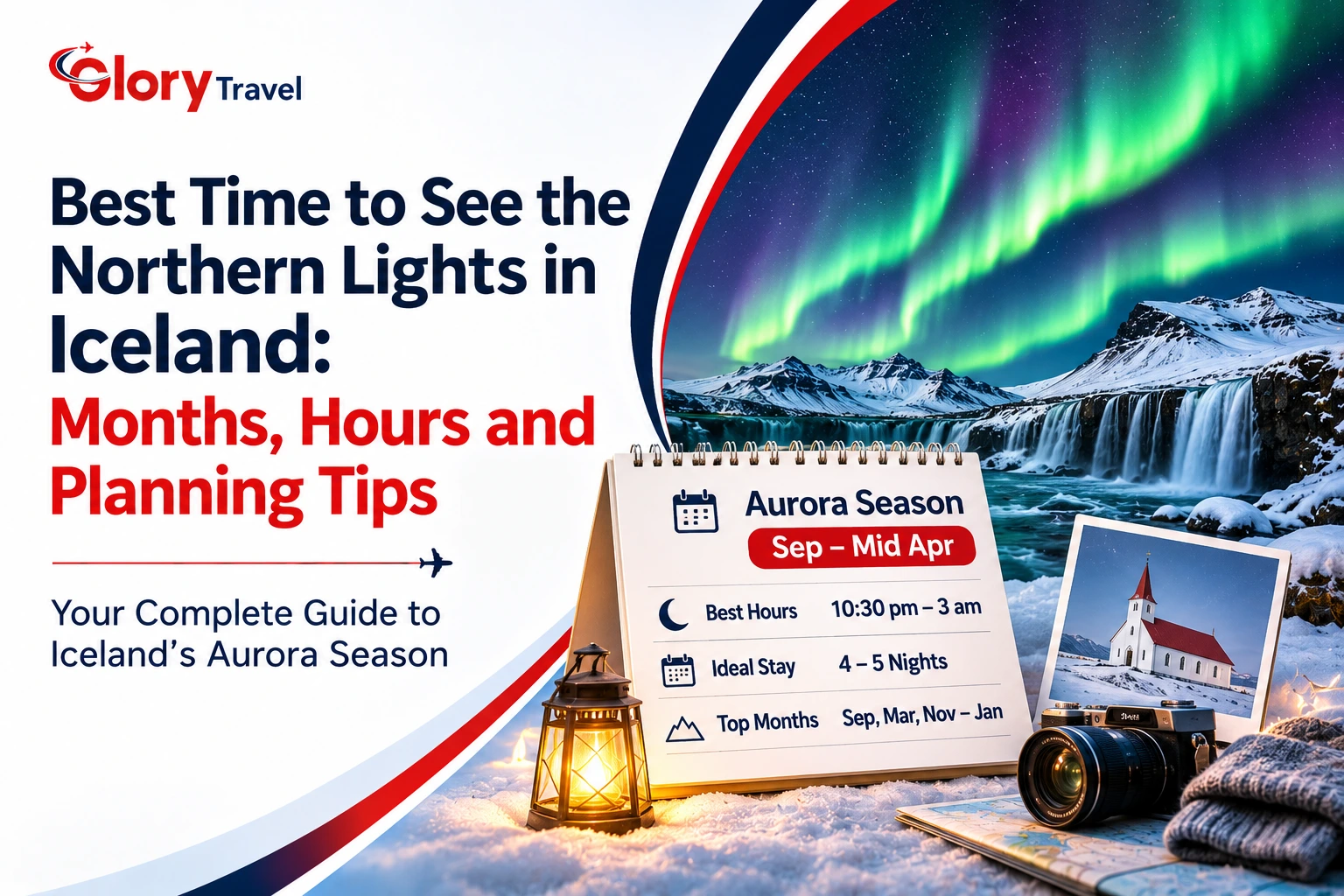
Quick Answer: Iceland's northern lights season runs from late August or September to mid-April, when the nights are dark enough. Most guides call September to April the window, with the darkest nights from November to January and the equinox months of September and March often cited as especially active. Sightings need darkness, clear skies and aurora activity together, so nothing is guaranteed. Reported peak viewing hours range from about 10:30 pm to 1 am, or from midnight to 3 am, so allow late nights. Plan at least four or five nights to improve your odds, and check both the aurora and cloud forecasts.
Seeing the northern lights is one of the best reasons to take a winter trip to Iceland, and one of the most uncertain. The aurora is a natural event, and the sky decides. What you can control is when you go, how long you stay, and how flexible your plan is. This guide covers all three, with notes for travellers from Singapore and Malaysia.
The aurora is active all year, but it is only visible when the sky is dark. In Iceland, that means the season runs from late August or September until mid-April. In the summer months, the nights are too bright to see the aurora, and midsummer has almost no darkness.
Most sources agree on the window but differ on the best months inside it:
|
Months |
What guides say |
|
September and March |
Often described as the best because of equinox activity, with milder weather and easier driving |
|
October and February |
Frequently called popular, combining long nights with milder conditions than midwinter |
|
November to January |
The darkest nights, which means more hours for a sighting, though also the coldest and shortest days |
|
April |
The end of the season, with the aurora fading as nights shorten |
There is one real disagreement. One major Iceland tour operator reports that September and October are the cloudiest months of the season and November is the clearest, while other guides favour the equinox months. Cloud cover decides whether you see anything, so you should not assume any single month is guaranteed.
Three things must happen together:
Darkness. The long nights from September to April provide it.
Clear skies. Cloud blocks the lights even when activity is high.
Aurora activity. Forecasts use a scale called Kp. One Icelandic guide suggests a level above three is a good level, but a quiet aurora under a clear sky can beat a strong one behind cloud.
Reports vary. One guide reports the best visibility at about 10:30 pm to 1 am, while others say midnight to 3 am. The sensible approach is to plan for late evenings, and be ready to stay out later if the forecast is good. Dress warmly, because standing still outdoors in winter feels much colder than moving.
Because weather changes quickly, a short stay is a gamble. Plan at least four to five nights, spread over different areas if possible, so a cloudy night is not a failed trip. Avoid cramming a single aurora tour into your last evening. If you book guided aurora tours, ask whether a repeat attempt is offered when the sky is cloudy.
Aurora forecast. The Icelandic Met Office publishes an aurora forecast, and Icelandic travel sites provide forecasts too.
Cloud cover forecast. Check the cloud map, not only the aurora level.
Light pollution. Move away from Reykjavik's lights. Golden Circle routes are popular for night trips.
Local guidance. Hotel staff and tour guides often know which direction the clear sky is.
Daylight is short. Winter days are only a few hours long around December, which affects sightseeing and driving plans. Use daytime for waterfalls, glaciers and ice caves, and keep nights for the aurora.
Roads change. Weather can close roads, so allow slack and consider guided tours if you are not experienced at winter driving.
Clothing. Wear thermal layers, insulated waterproofs, hat, gloves and boots with grip.
Camera. Bring a tripod, spare batteries and a way to keep your phone warm.
Prayer times change a lot with the season. In midwinter, the day is short, so Dhuhr and Asr fall close together. Check a local prayer timetable, because times shift quickly through the season.
Food. Halal options exist in larger towns, but may be limited outside Reykjavik. Plan meals, carry snacks and ask restaurants about ingredients.
Ramadan 2027 is expected to fall in roughly February to early March, inside the aurora season. Fasting days in winter are shorter than in summer, but late-night aurora outings still need planning around suhoor and rest. Our Ramadan 2027 dates guide has the dates.
Entry rules. Iceland is part of the Schengen area, and Malaysian and Singaporean passport holders can currently travel there visa-free for short stays. Check the latest requirements before you go, and our visa-free country list for Malaysian passports lists other options.
Many travellers pair Iceland with the UK or mainland Europe to make the long flight worthwhile. Our Iceland and Scotland tour covers a nine-day route across Iceland and Scotland. For multi-stop planning, our guide to multi-country Europe trips explains how to sequence countries and manage logistics. If you are travelling as a couple, our honeymoon destinations guide lists other destinations to consider.
Best chance with comfortable weather: September or March, with five nights.
Longest nights: November to January, accepting cold and short days.
Cheaper trip: shoulder months such as April or early October, when prices are lower.
First-time winter traveller: book a guided package with flexible tour options.
When is the best time to see the northern lights in Iceland?
The season runs from late August or September to mid-April. Many guides name September, March and the darkest months from November to January as strong options, but sightings depend on clear skies and aurora activity.
Can you see the northern lights in Iceland in summer?
No, not in practice. The nights are too bright in summer, and midsummer has almost no darkness. The season begins as nights lengthen in late August or September.
What time of night is best for the aurora?
Reports differ, from about 10:30 pm to 1 am in one guide to midnight to 3 am in others. Plan for late evenings and stay flexible if the forecast is good.
How many nights do I need in Iceland to see the northern lights?
Plan at least four to five nights, because cloud and weather change quickly. A single night is a gamble.
Is the northern lights guaranteed on a tour?
No. The aurora is a natural event. Tour operators can improve your chances by moving to clear skies, and some offer another attempt if you see nothing, so ask before you book.
Do Malaysians and Singaporeans need a visa for Iceland?
Iceland is in the Schengen area, and Malaysian and Singaporean passport holders can currently travel there visa-free for short stays. Check the latest entry requirements before you go.
Best Iceland-Scotland 9 Days 8 Nights Tour Package From Malaysia for a ready route that includes Iceland
How to Plan a Multi-Country Europe Trip (2026 Complete Guide) for sequencing several countries
Visa-Free Countries for Malaysian Passport 2026 for entry rules across destinations
Best Honeymoon Destinations in 2026 for other couple-friendly trips
Ramadan 2027 Dates & Umrah Booking Calendar for Singapore and Malaysia for Ramadan dates when planning a winter trip
Glory Travel & Tours (TA 03786) can help you choose the right month and trip length for Iceland, so your plan allows for clouds as well as clear skies.
WhatsApp us to plan your Iceland trip: +65 8080 6047
Browse our leisure packages: glorytravelandtours.com/package/leisure
Talk to our team about northern lights dates: Contact Glory Travel & Tours


Glory Travel and Tours offers unforgettable journeys with expertly crafted Hajj, Umrah, and leisure packages. Committed to excellence, we ensure comfort, convenience, and care every step of the way.
Copyright© 2025 GloryTravel. All Rights Reserved.

SHARE THIS BLOG