
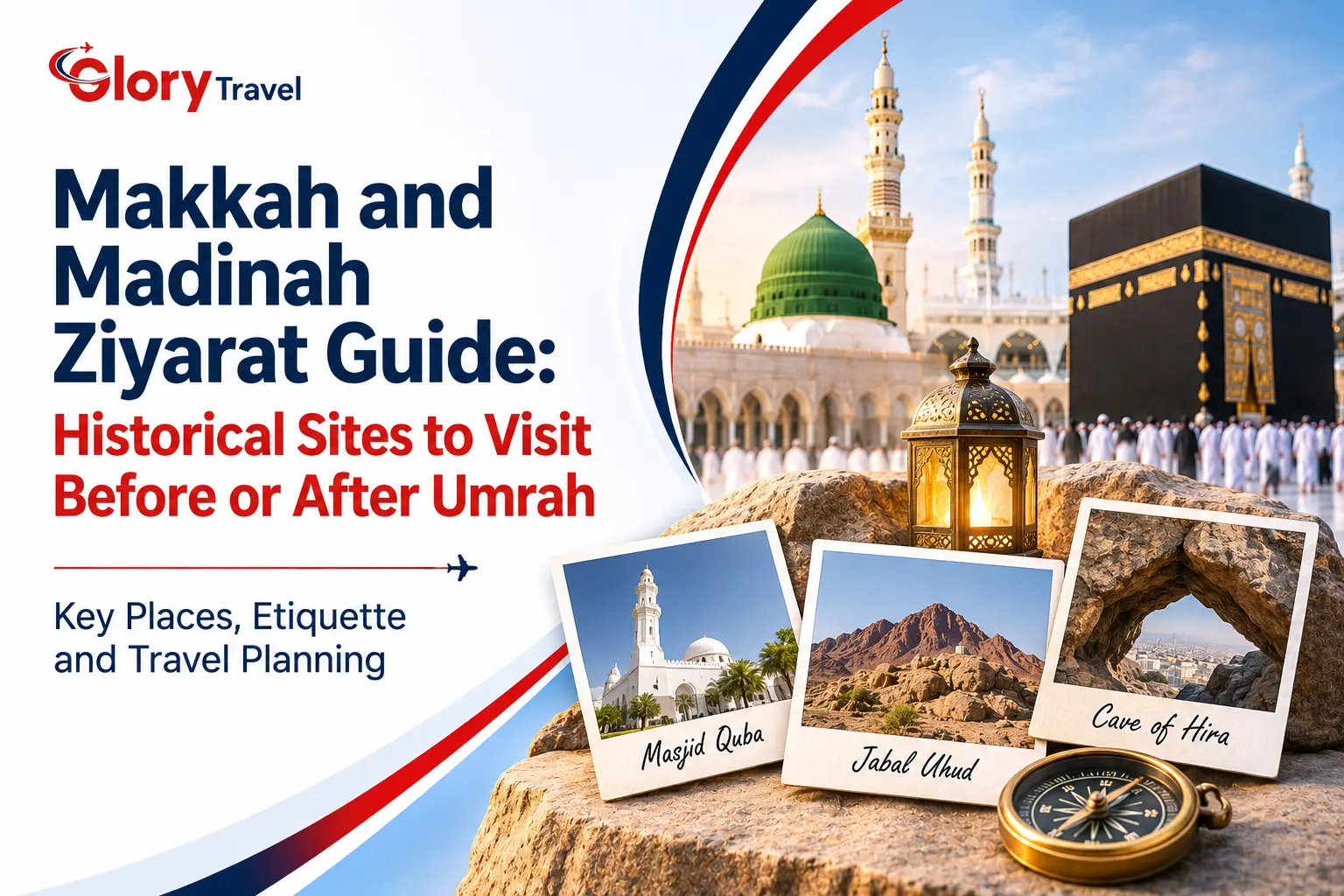
Quick Answer: Ziyarat means visiting the historical and holy sites of Makkah and Madinah, and it is separate from the rites of Umrah. In Madinah the usual stops are Masjid Quba, Masjid al-Qiblatain, Jabal Uhud and the martyrs' cemetery, and the Seven Mosques area. In Makkah, visitors commonly go to Jabal al-Nour (Cave of Hira), Jabal Thawr, Arafat and Jabal ar-Rahmah, Mina and Muzdalifah, and Masjid Aisha at Taneem. Group tours usually run as half-day outings by coach or car, so ask your agent whether ziyarat is included, and keep the plan light if you are travelling with elderly pilgrims.
After the rites of Umrah are complete, many pilgrims want to see the places where the Prophet's story unfolded. That is ziyarat: visits to historical sites that deepen your understanding of the journey. It is not required, it is not a ritual, and it is not the reason you travelled, but done thoughtfully it can make the history of Islam feel close. This guide covers the main sites, in the order most guides use, and how to plan the days.
Ziyarat is educational and reflective. The rites of Umrah are Ihram, Tawaf, Sa'i and shortening or shaving the hair. Visiting a mosque or mountain is not part of those rites. Etiquette at each site is a matter your Mutawwif or scholar can advise on, and it is wise to follow their guidance rather than customs you hear from fellow travellers. Keep visits respectful, quiet and free of rituals that have no basis in the sunnah.
Madinah ziyarat is typically done as one half-day outing, which is why group tours often run it after Fajr and return before Zuhr.
|
Site |
What it is known for |
|
Masjid Quba |
Widely described as the first mosque in Islam. The Prophet is reported to have said that whoever purifies himself at home, then comes to Masjid Quba and prays in it, receives a reward like that of Umrah. The Prophet is also reported to have visited it regularly |
|
Masjid al-Qiblatain |
The mosque where the direction of prayer is reported to have been changed from Jerusalem to Makkah during prayer, in the Banu Salama area |
|
Jabal Uhud and the martyrs' cemetery |
The site of the Battle of Uhud, which many visitors associate with lessons on discipline, sacrifice and obedience |
|
Seven Mosques area |
A group of small mosques linked to the Battle of the Trench |
|
Date farms and markets |
Often added to a tour for buying Madinah dates such as Ajwa and Sukkari |
A typical order is Quba, then the date farms, Qiblatain, the Seven Mosques area and Uhud, returning to the Prophet's Mosque by Zuhr. Leave time for the Rawdah visit separately, since it needs its own permit.
|
Site |
What it is known for |
|
Jabal al-Nour and the Cave of Hira |
The mountain north of the Haram where the first revelation is reported to have come. The climb to the cave is steep and strenuous, so it is a visit for fit pilgrims only, and many people choose to view the mountain from below |
|
Jabal Thawr |
The mountain south of the Haram with the cave where the Prophet and Abu Bakr took refuge for three nights during the migration to Madinah |
|
Arafat and Jabal ar-Rahmah |
The plain and hill central to the Hajj rites, visited by many pilgrims outside the Hajj days |
|
Mina and Muzdalifah |
The other Hajj sites, often included in a Makkah ziyarat circuit |
|
Masjid Aisha at Taneem and Masjid al-Ji'ranah |
Popular miqats for pilgrims who intend a second Umrah and need to enter Ihram |
Ask your guide what access looks like at the Hajj sites outside the Hajj days. Some Umrah packages listed on Nusuk include a guided spiritual tour of Makkah and Madinah landmarks, so check what your own package states.
Choose times carefully. In hot months, go early morning or evening. Coaches and cars are less crowded after Fajr.
Match the plan to the people. Mountain climbs and long stops are not suitable for every pilgrim. For older family members, choose Quba, Qiblatain and a short Uhud stop rather than a full day of walking.
Do not let ziyarat replace rest. Tawaf, Sa'i and travel between the two cities are tiring. Schedule a rest day before any long outing.
Carry water, sun protection and your Nusuk or hotel details.
Dress modestly and cover as you would for prayer.
Keep your voice low and avoid blocking walkways.
Photograph respectfully. Many people photograph the exteriors, but avoid taking photographs inside mosques during prayer.
Avoid removing stones or soil, and avoid acts of worship at the sites that you have not been taught are established. Ask your scholar if you are unsure what is appropriate.
Follow the instructions of site staff. Access can change, for example around crowds, works or events.
Is ziyarat included, and is the vehicle private or shared?
How many sites in Makkah and Madinah, and how long at each?
Will a guide explain the history, or is it only a drop-off?
Are there options for elderly pilgrims or those who prefer a shorter route?
Can we adjust the order if the weather or crowds change?
A Mutawwif who is also a good guide is worth asking for in advance. Our guide to choosing a Mutawwif lists what to look for. For understanding what normally comes with a package, see our guide to Umrah package inclusions, and for pacing the sequence of rites itself, see our Hajj and Umrah step-by-step guide. If you are travelling with parents or children, our family Umrah packages guide covers planning for different ages.
What is ziyarat in Makkah and Madinah?
Ziyarat means visiting the historical and holy sites of the two cities. It is separate from the rites of Umrah and is not obligatory, but many pilgrims add it to learn about the places linked to the Prophet's life.
Which are the most important ziyarat places in Madinah?
The usual stops are Masjid Quba, Masjid al-Qiblatain, Jabal Uhud with the martyrs' cemetery, and the Seven Mosques area. Many tours also stop at date farms and markets.
Why do people visit Masjid Quba?
Because it is widely described as the first mosque in Islam, and because a hadith reports that whoever purifies himself at home and prays in Masjid Quba receives a reward like that of Umrah.
Which ziyarat sites are in Makkah?
Common stops include Jabal al-Nour and the Cave of Hira, Jabal Thawr, Arafat with Jabal ar-Rahmah, Mina and Muzdalifah, and the miqats of Masjid Aisha at Taneem and Masjid al-Ji'ranah.
Is climbing Jabal al-Nour necessary?
No. It is not a ritual. The climb is steep and strenuous, so it suits only fit pilgrims, and many visitors view the mountain from below.
Is ziyarat included in an Umrah package?
It depends on the package. Some include a guided tour of Makkah and Madinah sites, while others leave it optional, so check what is written and whether transport is shared or private.
Choosing a Mutawwif or Tour Guide: Questions to Ask Before You Book for finding a guide who explains the history, not just the route
Umrah Package Inclusions Explained: What "All-Inclusive" Really Means to check whether ziyarat and transport are included
Hajj and Umrah Step by Step: A Complete Guide for Pilgrims for the sequence of rites that ziyarat sits around
Family Umrah Packages Guide 2026 for planning outings with children and parents
Best Time to Perform Umrah in 2026: Month-by-Month Weather, Crowds & Tips for choosing months with comfortable weather for outdoor sites
Glory Travel & Tours (TA 03786) can show you how ziyarat days fit around the rites, the Rawdah permit and rest days, so the history adds to your journey instead of tiring you out.
WhatsApp us to plan your Umrah and ziyarat: +65 8080 6048
Browse our Hajj & Umrah packages: glorytravelandtours.com/package/hajj-umrah
Talk to our team about guided ziyarat options: Contact Glory Travel & Tours


Glory Travel and Tours offers unforgettable journeys with expertly crafted Hajj, Umrah, and leisure packages. Committed to excellence, we ensure comfort, convenience, and care every step of the way.
Copyright© 2025 GloryTravel. All Rights Reserved.


SHARE THIS BLOG